Inscription forbidding non-Jews to enter the temple on pain of death (replica in the Citadel Museum).
A mikveh – pool for Jewish ritual washing—at the Herodion
Qumran, a mikveh (pool for Jewish ritual washing).
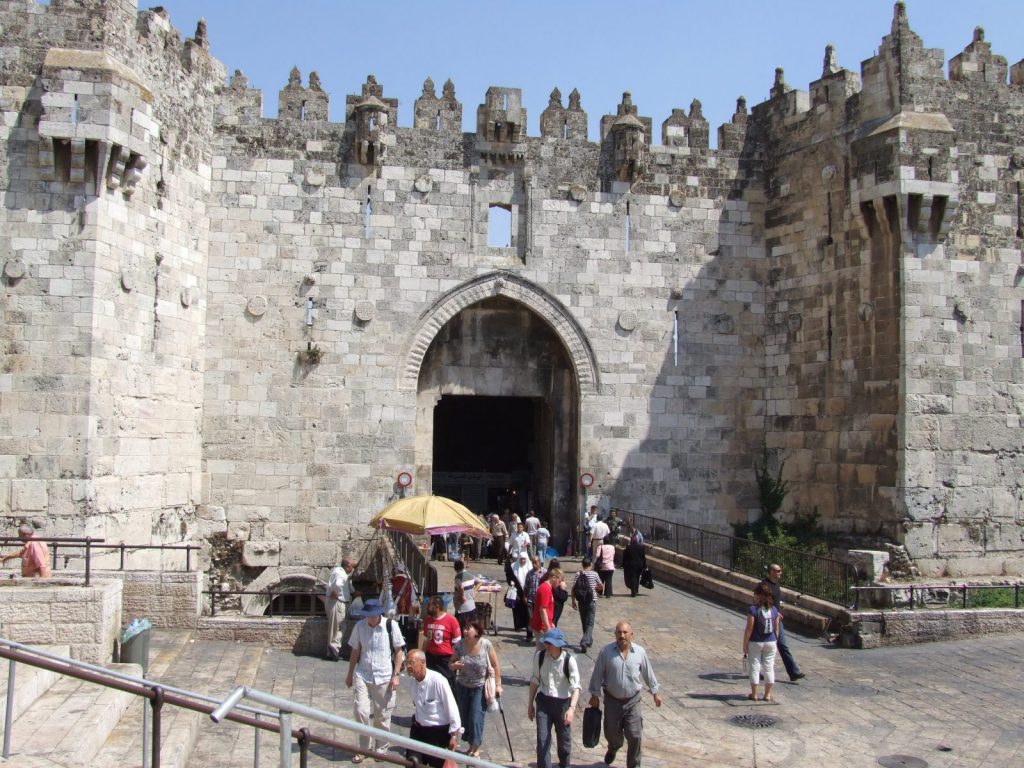
The Damascus Gate, Jerusalem, from where Paul would have set out for Damascus on his mission to arrest Christians there. But somewhere on the Golan Heights he had an encounter with the risen Jesus.
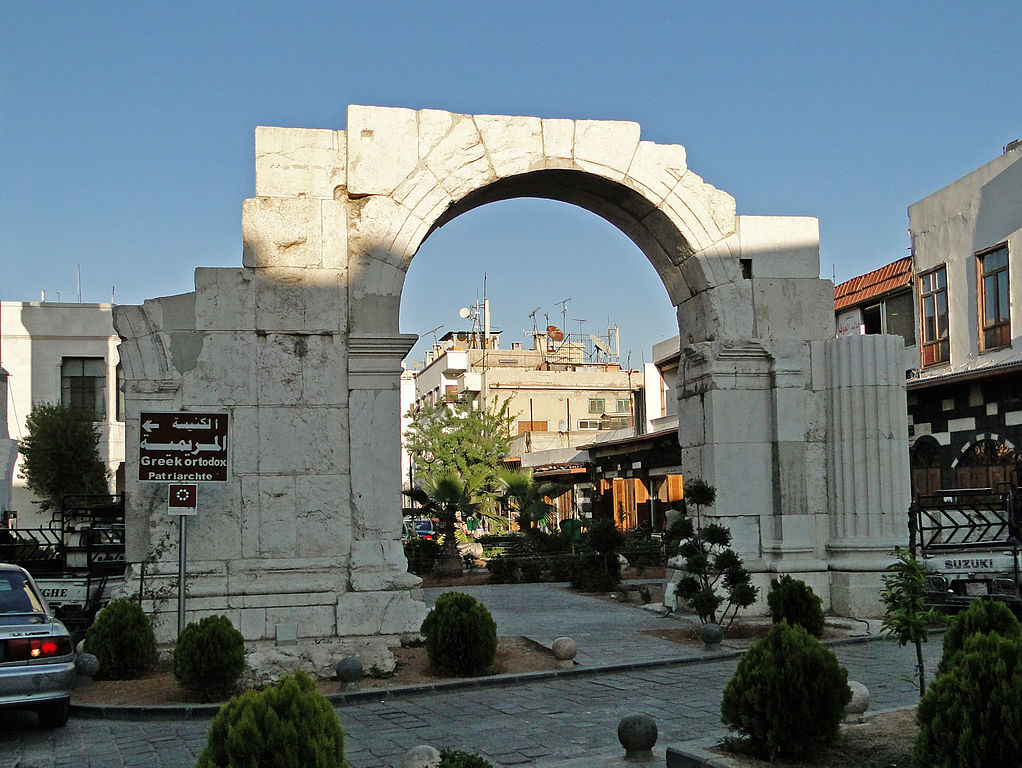
Damascus, where Paul was welcomed as a Christian by Ananias (Acts 9:10-19). The photo shows the Roman triumphal arch in Straight Street.
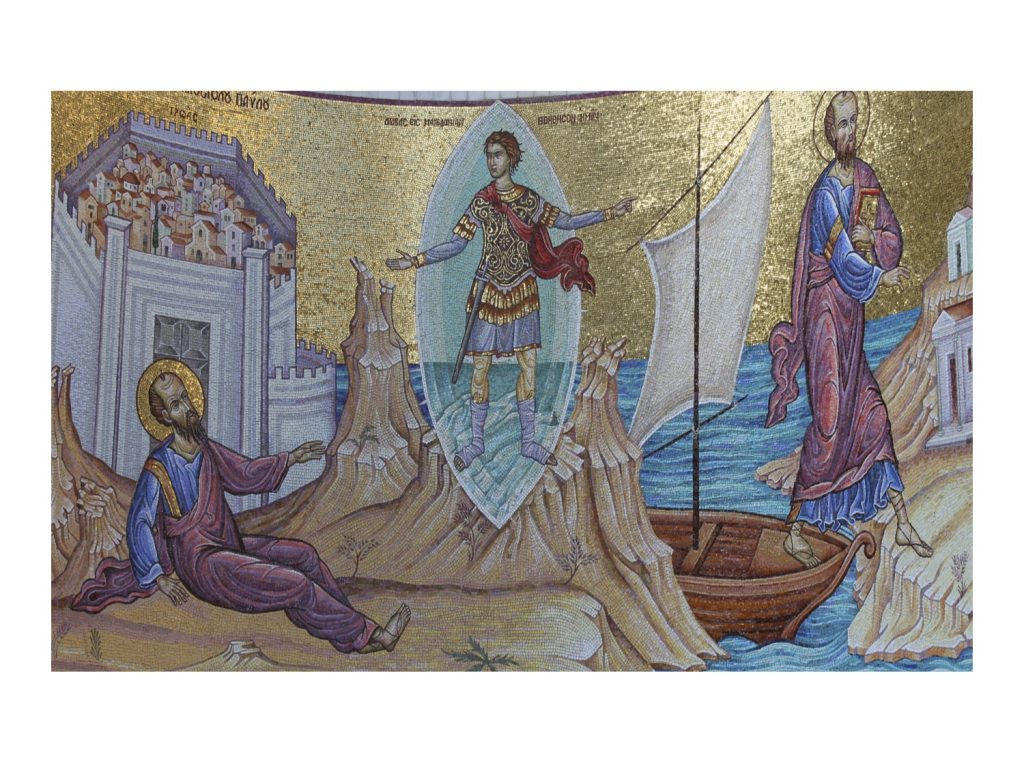
Troas (in north-west Asia Minor), the ‘Macedonian call’ mosaic (see Acts 16:8)
Kavala (ancient name Neapolis), the harbour where Paul arrived on Greek soil.
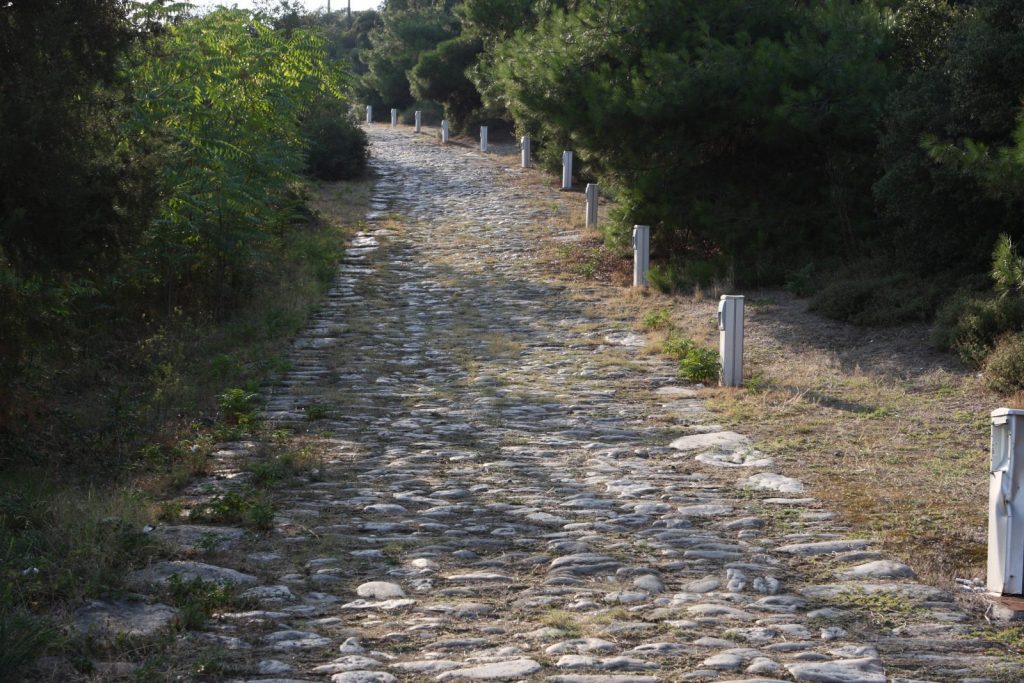
Kavala, Roman road to Philippi (the Via Egnatia).
Philippi theatre. Beyond is the plain where the battle of Philippi was fought, resulting in victory for Octavian and Mark Antony, and Octavian becoming the first Emperor of Rome
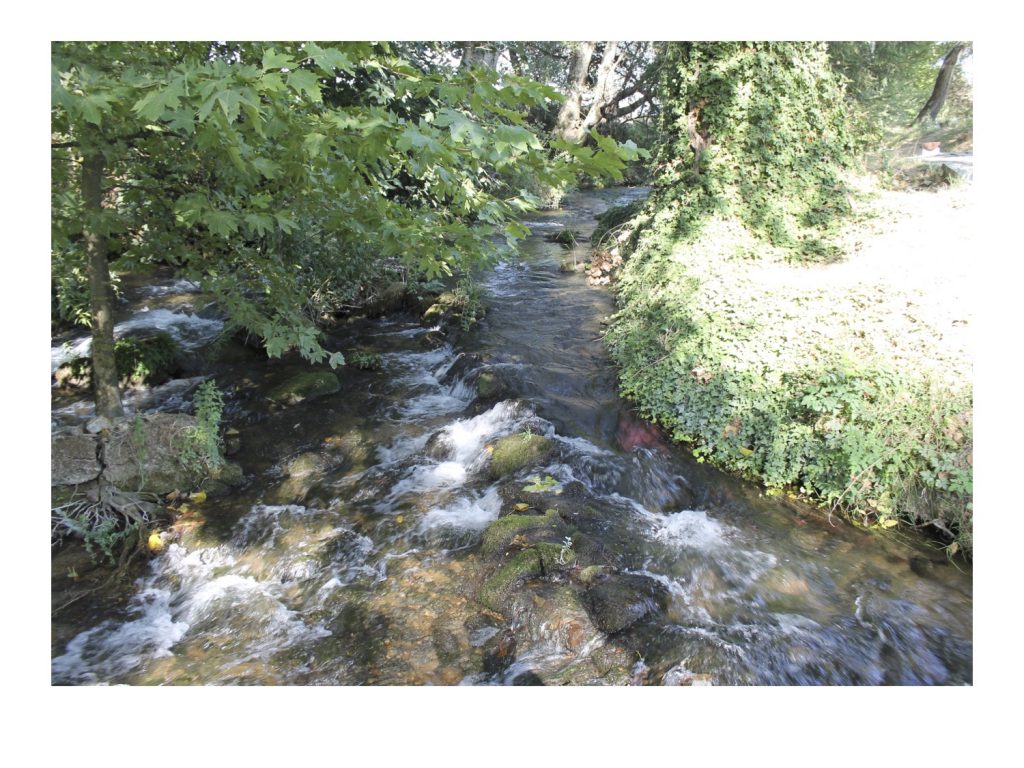
Philippi river
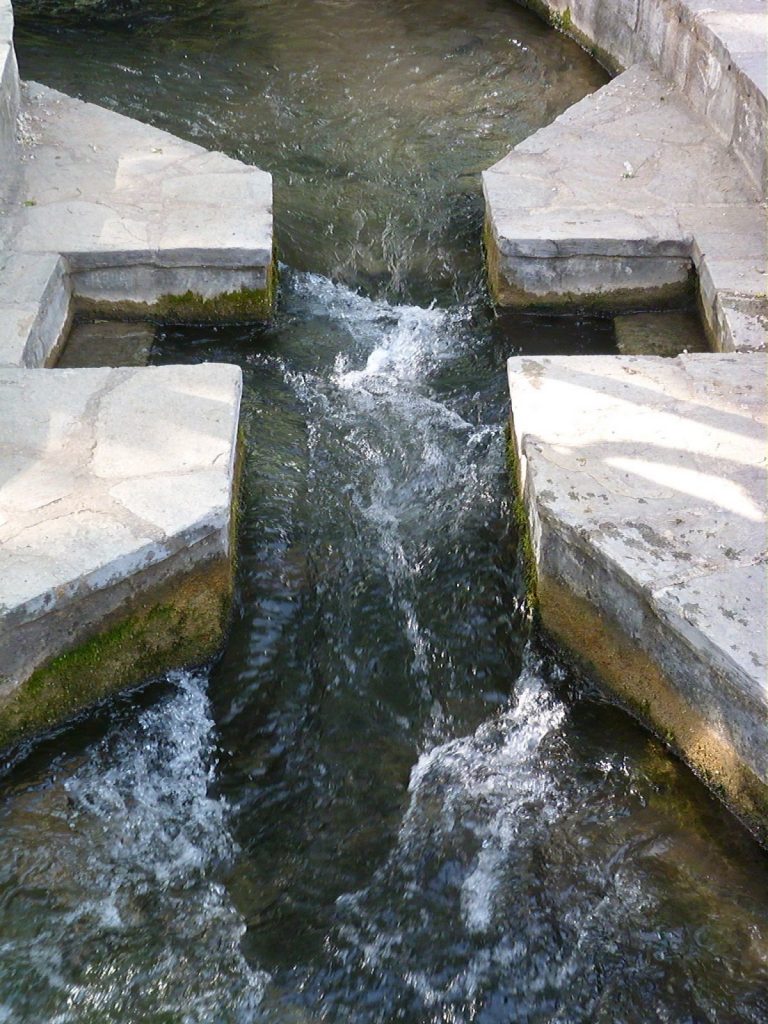
Philippi, place of baptism – recalling the story of Lydia’s baptism by Paul (Acts 16:13-15).
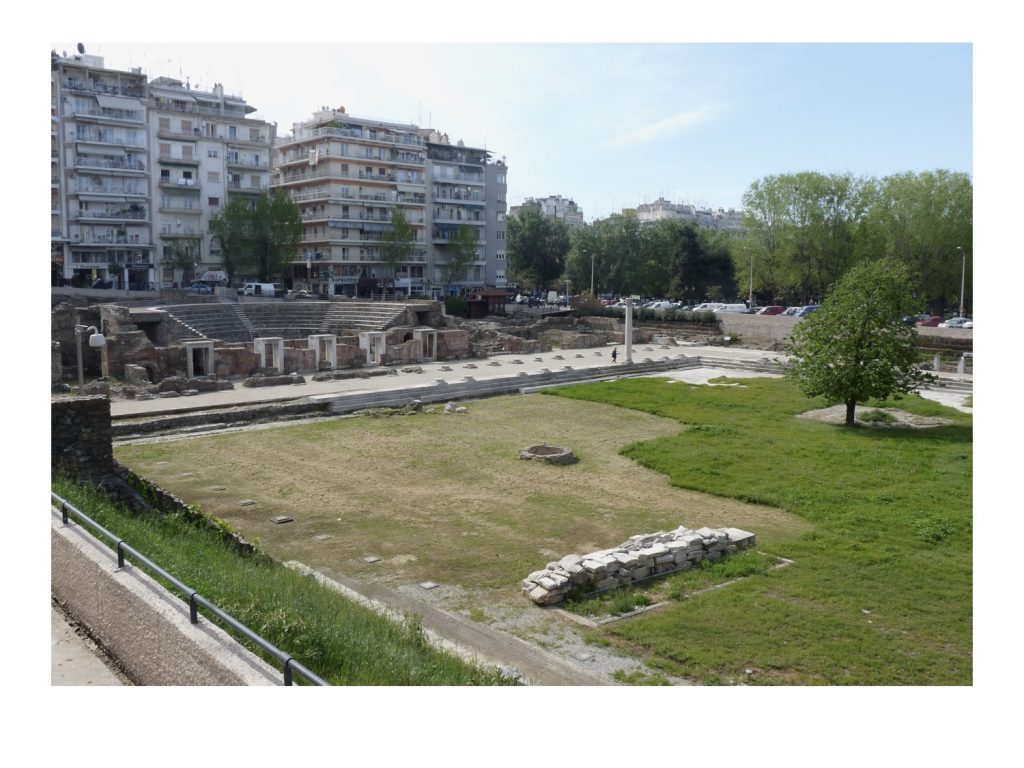
Thessalonica, agora
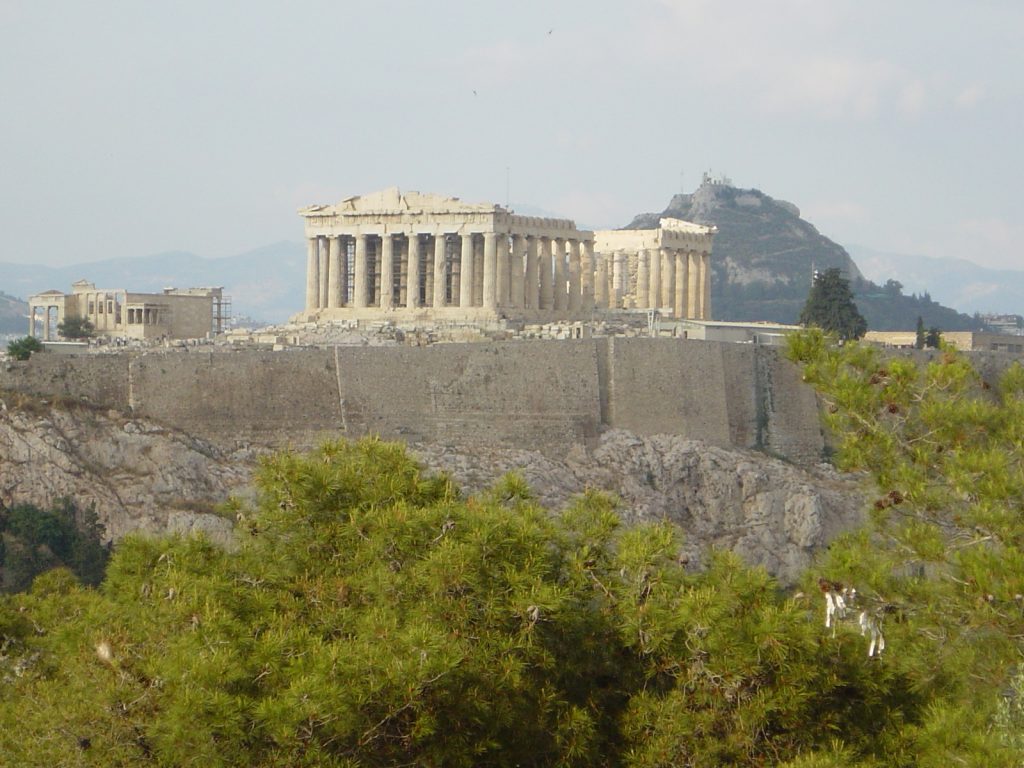
Athens, the Acropolis
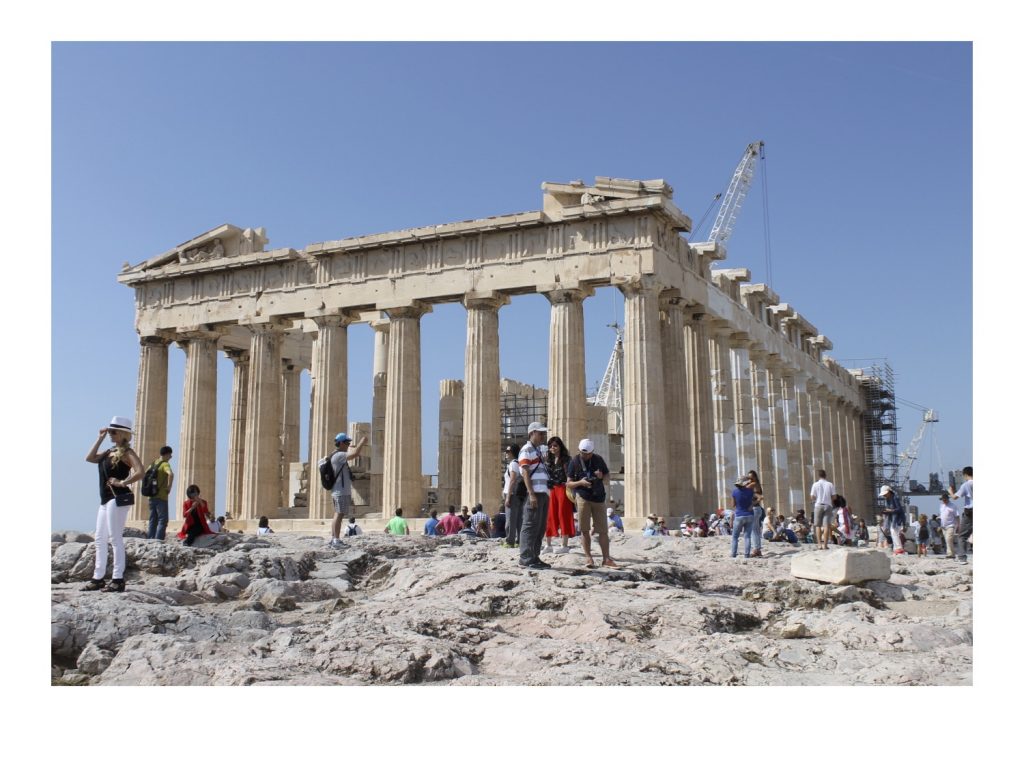
Athens, the Parthenon ‘front’
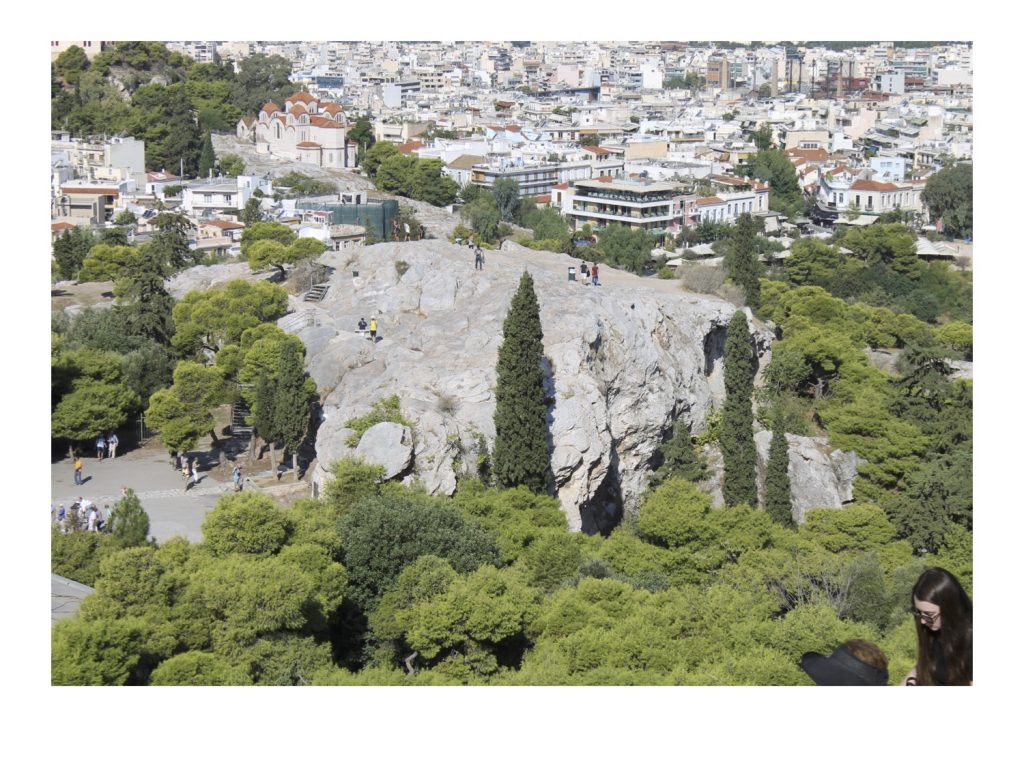
Athens, The Areopagus (from the Acropolis)
The ‘Gallio inscription’ from Delphi
The Gallio inscription in Delphi, which enables us to pinpoint the date of Paul’s stay in Corinth (Acts 18). Translation below.
Tiberius [Claudius] Caesar Augustus Germanicus, [Pontifex Maximus, in his tribunician] power [year 12, acclaimed Emperor for] the 26th time, father of the country, [consul for the 5th time, censor, sends greeting to the city of Delphi.]
I have for long been zealous for the city of Delphi [and favourable to it from the] beginning, and I have always observed the cult of the [Pythian] Apollo, [but with regard to] the present stories, and those quarrels of the citizens of which [a report has been made by Lucius] Junius Gallio my friend and [pro]consul [of Achaea]….
Translation from C. K. Barrett, ed. The New Testament Background: Selected Documents. revised ed. London: SPCK, 1987, 51-52
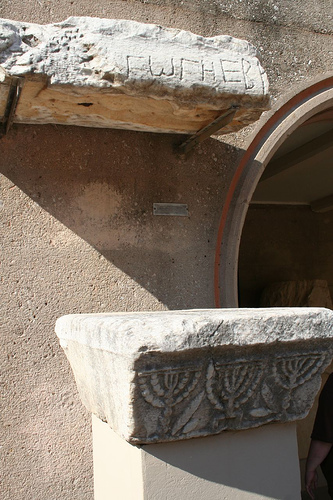
Corinth synagogue inscription (above). The Greek reads: [syna]goge hebr[aion] – ‘synagogue of the Jews’. The carving below of three menorahs is another characteristic expression of Jewish identity.
Workshop in Corinth (imagine Paul sharing space here with Priscilla and Aquila).
Erastus inscription. This inscription dating from the mid-first century in the theatre in Corinth states: ‘Erastus in return for his aedileship paved it at his own expense’. Aediles were public officials responsible for maintenance of public buildings and buildings. It is quite possible that the Erastus who commissioned this pavement was the man who sends greetings to the believers in Rome in Romans 16:23.
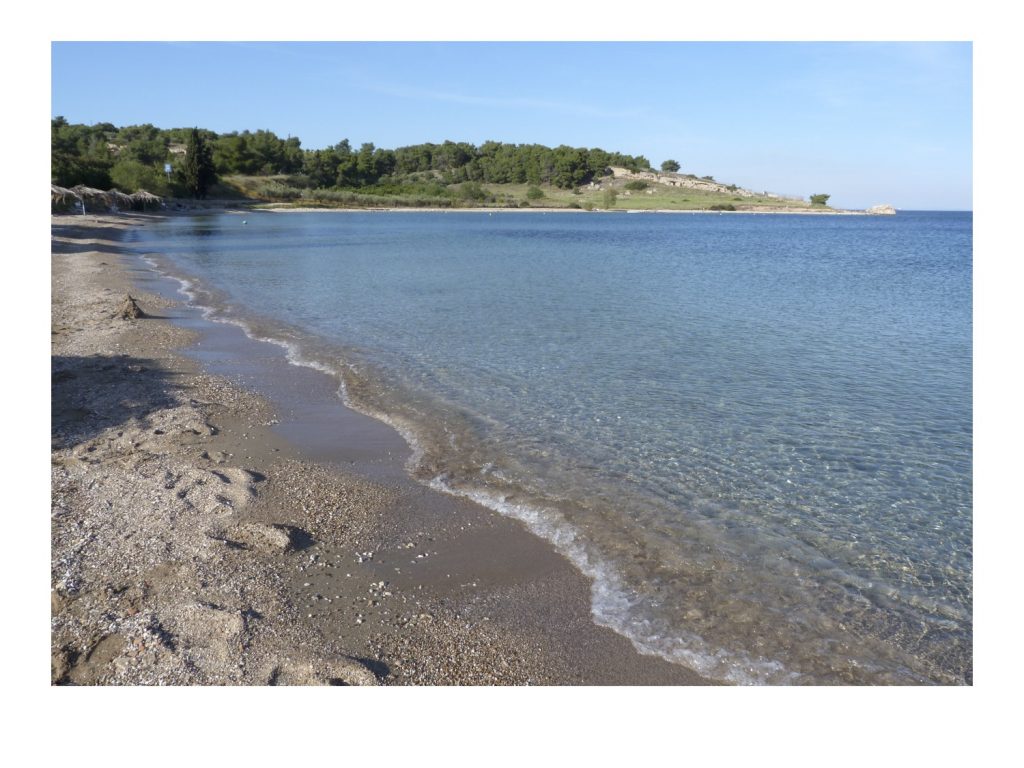
Cenchreae, view to south-west. Phoebe was a leader in the church here (Romans 16:1), and Paul sailed from here to Ephesus after his missionary journey in Greece (Acts 18:18).
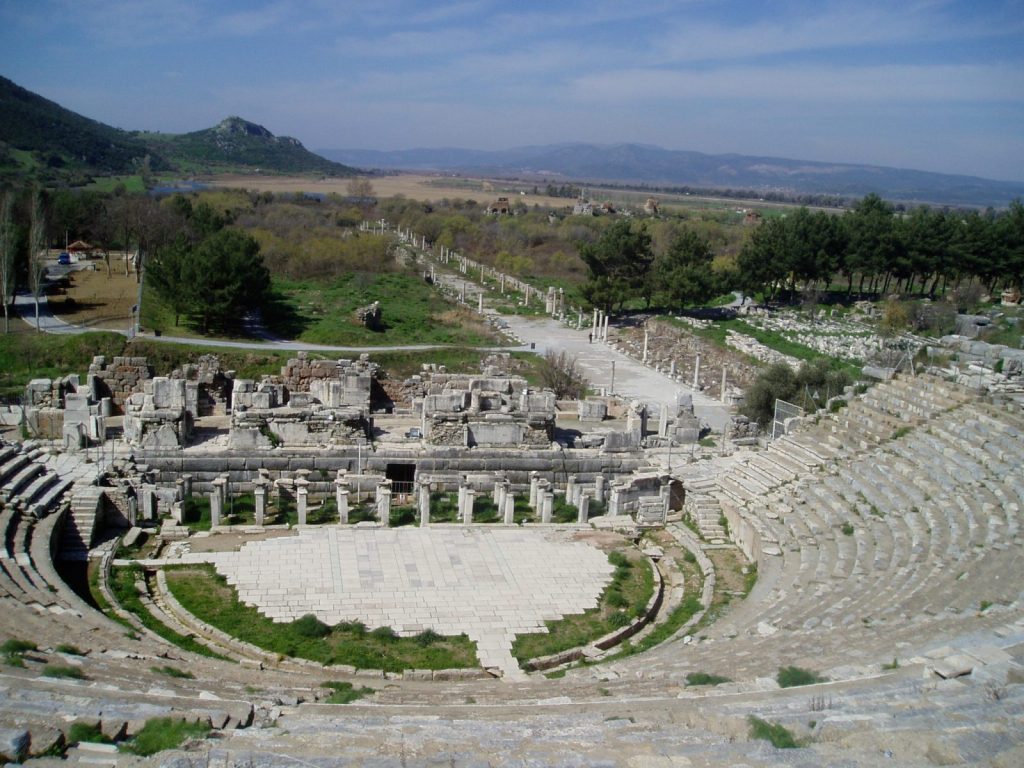
The theatre, where Paul’s presence provoked a riot (Acts19:23-41).
A model of the temple of Artemis (Diana) in Ephesus (see Acts 19:23-41).
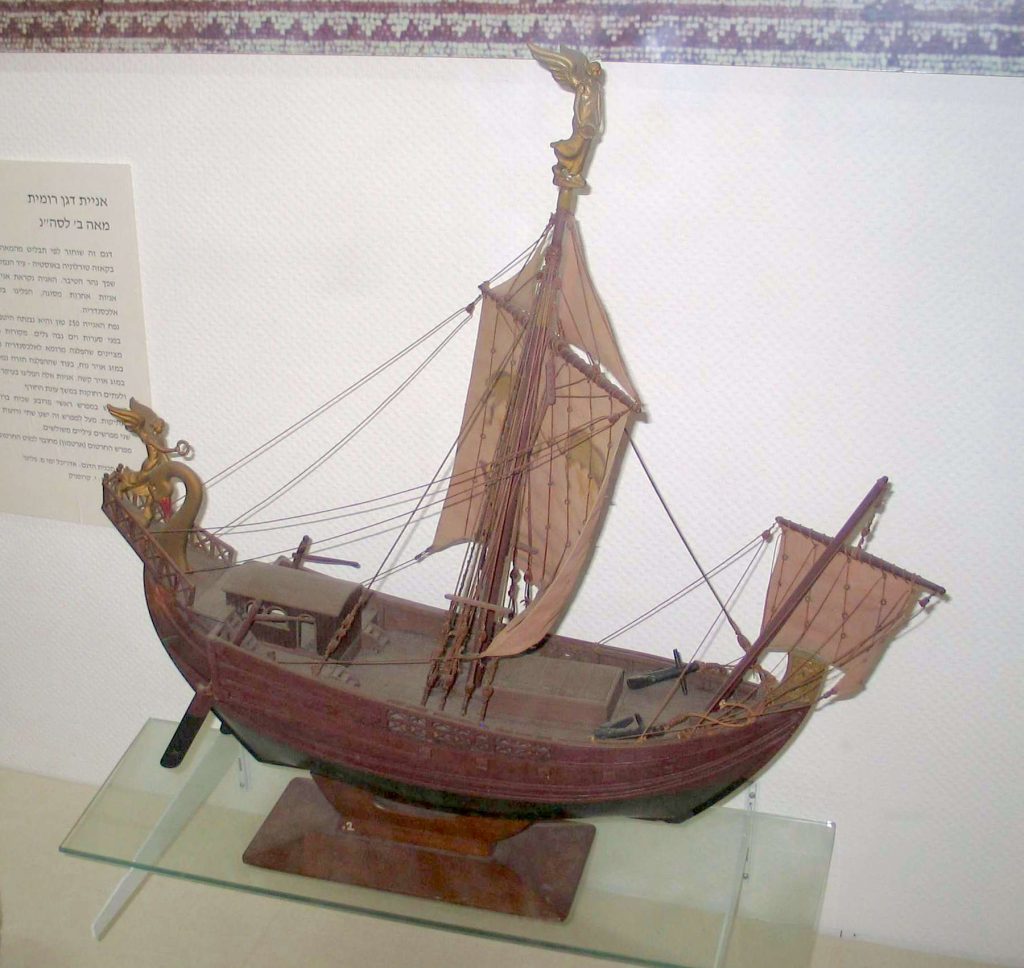
A Roman grain ship, such as the one on which Paul sailed to Rome (Acts 27-28). Such ships could typically carry a cargo of 100 to 150 tons, though some were much larger.
Model of a Roman grain ship (Haifa Maritime Museum).